United News 24 Desk ::
In the quiet village of Sonarampur, tucked away in Ashuganj, Brahmanbaria, six men, including three Chinese nationals, were recently sentenced to 15 days in jail for running an illegal lead smelting factory. The factory had been spewing toxic fumes into the air and contaminating the surrounding environment. The 3 July raid, conducted by a mobile court alongside the Department of Environment and local administration, was part of a growing nationwide crackdown on unlicensed battery recycling plants.
But this was far from an isolated case. Just days earlier, two secret smelting sites hidden deep in the Gojari forest in the Ghatail sub-district under Tangail district were demolished, and another illegal factory on the banks of the Payra River in Barguna was fined and shut down. What links these seemingly scattered operations is a toxic trade that has spread quietly across the country, fuelled by a growing informal lead-acid battery industry and weak enforcement mechanisms.
Behind much of the progress in tackling this crisis is the tireless work of YouthNet Global, a grassroots network of young environmental defenders that has played a pivotal role in exposing the scale of the problem. Through a combination of community mobilisation, strategic policy advocacy and innovative digital campaigning, YouthNet has helped turn an invisible environmental health emergency into a national priority of the interim government of Bangladesh.
 A Silent Epidemic:
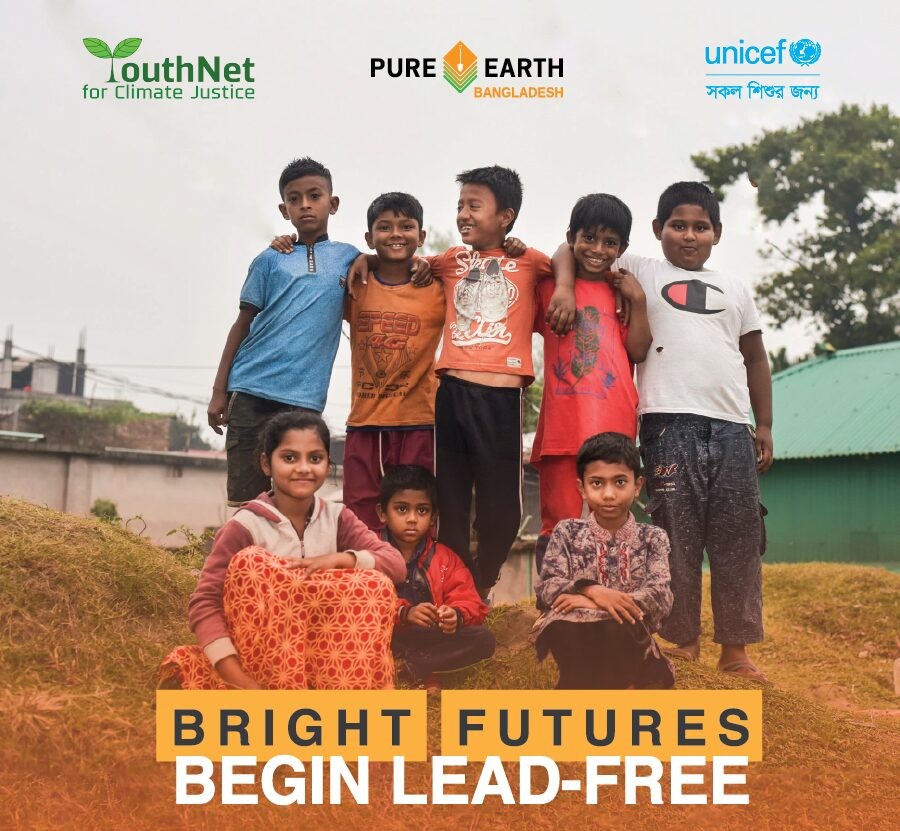
Lead pollution from informal battery recycling is a public health catastrophe hiding in plain sight. Bangladesh’s transition to electric mobility, particularly the widespread use of battery-powered rickshaws, now numbering over four million, has created a lucrative market for battery disposal and recycling. The lead-acid battery market is estimated to be worth more than BDT 10,000 crore (USD 1.15 billion), having tripled in size over the past decade.
But much of this industry operates outside the bounds of safety or regulation. Across Bangladesh, makeshift smelting plants melt down used batteries over open flames in forests, farmland, and riverbanks, releasing clouds of lead particles and leaking acid into the soil and waterways. These operations are difficult to track and even harder to stop.
Over the last six months alone, Bangladeshi authorities have shut down nearly 50 illegal factories across districts like Dhaka, Gazipur and Narsingdi—action driven in no small part by public pressure from YouthNet and its coalition partners.
Youth-Led Resistance:
“This is a public health emergency,” said Sohanur Rahman, Executive Coordinator of YouthNet Global. “It’s the dark side of the green transition. Only temporary crackdowns aren’t enough without a holistic plan and implementation. We need systemic change, transparency, and stronger regulation to break this toxic cycle.”
One of YouthNet’s landmark achievements came in the village of Fulbaria, Narsingdi, where the group supported local residents in their legal struggle against a Chinese-owned battery recycling plant. Once a lush agricultural zone, the area became poisoned by industrial wastewater and thick orange sludge.
Backed by YouthNet’s legal and media campaign, the Supreme Court ordered the permanent closure of the factory, marking one of the country’s first major victories against illegal lead smelting. But the battle didn’t end there. Local protesters have since faced retaliatory lawsuits filed by the company in a bid to silence opposition.
“We don’t just fight pollution, we stand with the people risking everything to speak out,” said Rahman. “Protecting environmental defenders is crucial if we want real change.”
 Children on the Frontline:
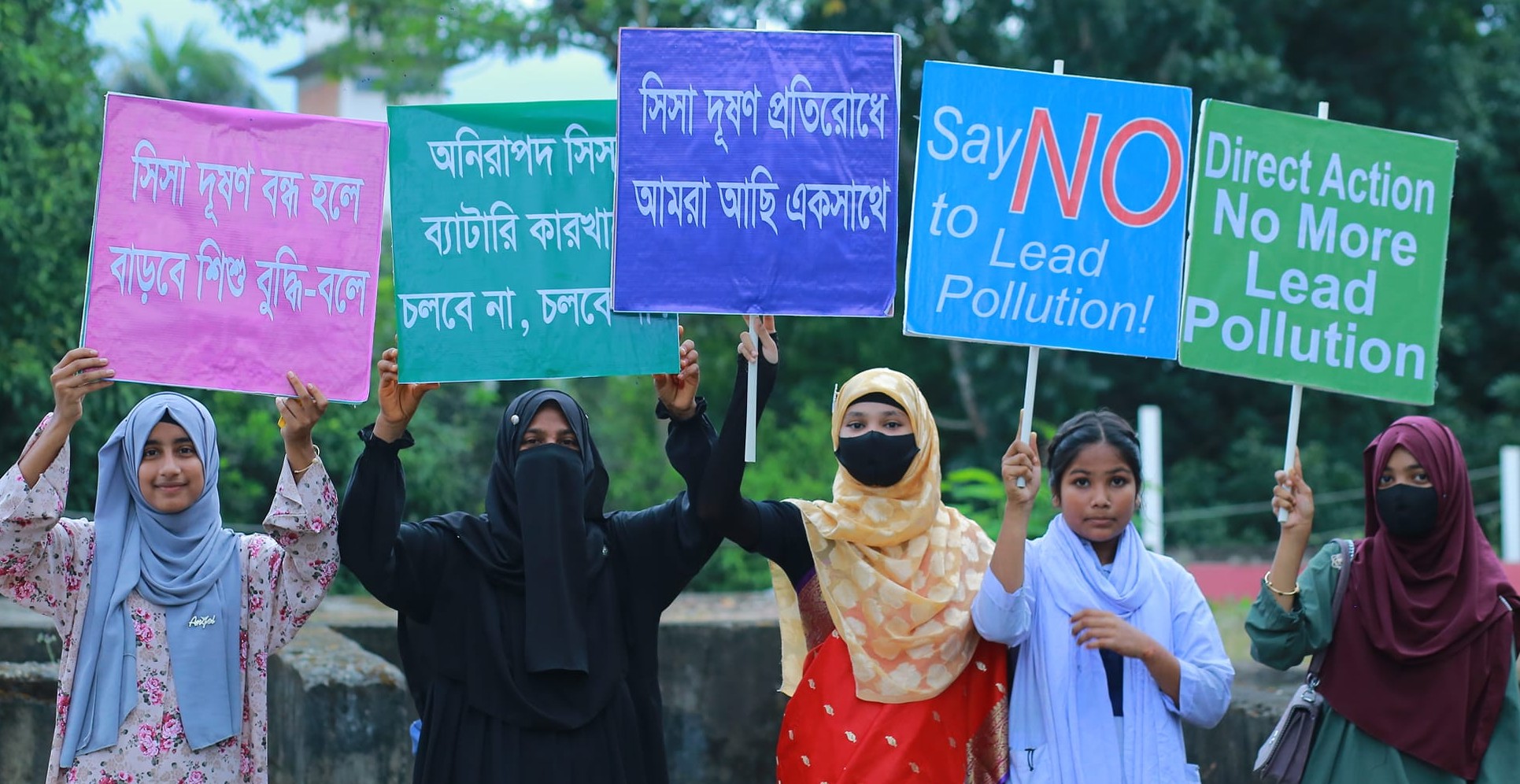
Perhaps the most tragic aspect of the crisis is the toll on children. According to UNICEF, more than 35 million children in Bangladesh are estimated to have dangerously high levels of lead in their blood, placing the country fourth globally in lead exposure.
The consequences are devastating: irreversible brain damage, developmental delays, and long-term health complications. The poorest and most marginalised communities are disproportionately affected, with few having access to medical diagnosis or care.
“Our children are paying the highest price for this environmental crime,” Rahman said. “We are fighting to end this silent poisoning and to secure a future where no child’s life is sacrificed for profit.”
Changing Behaviour, Changing Policy:
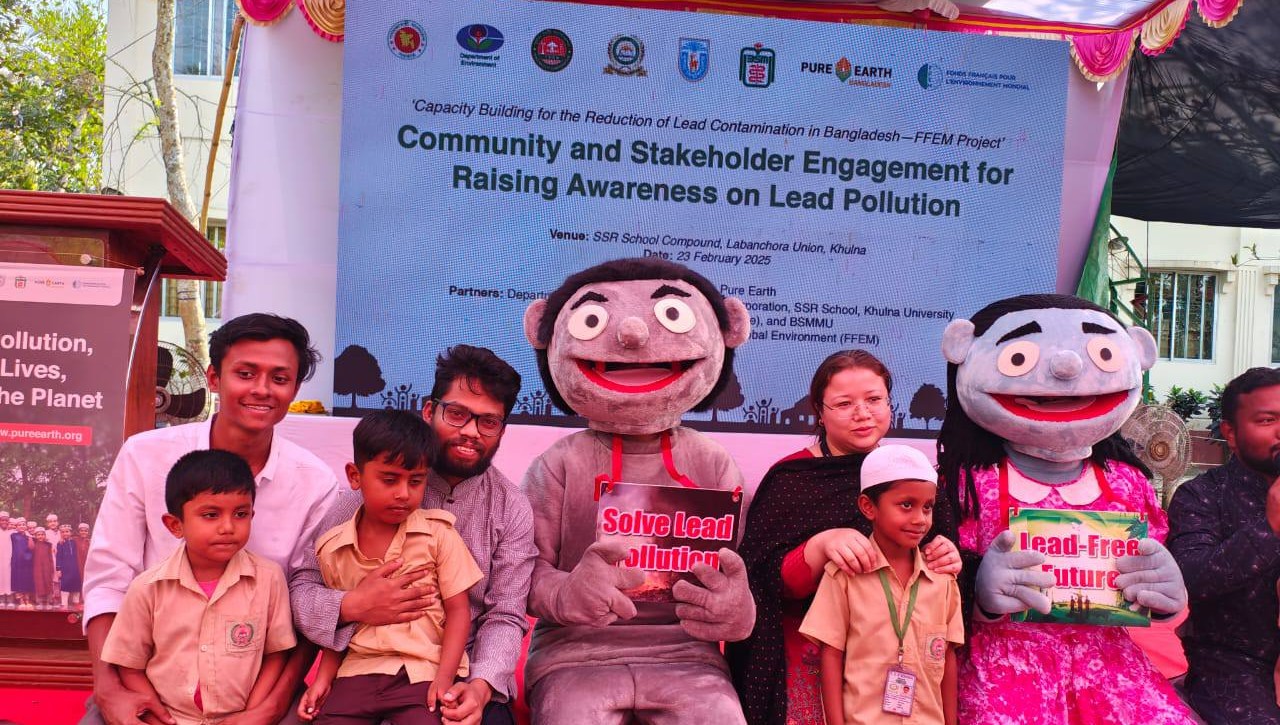
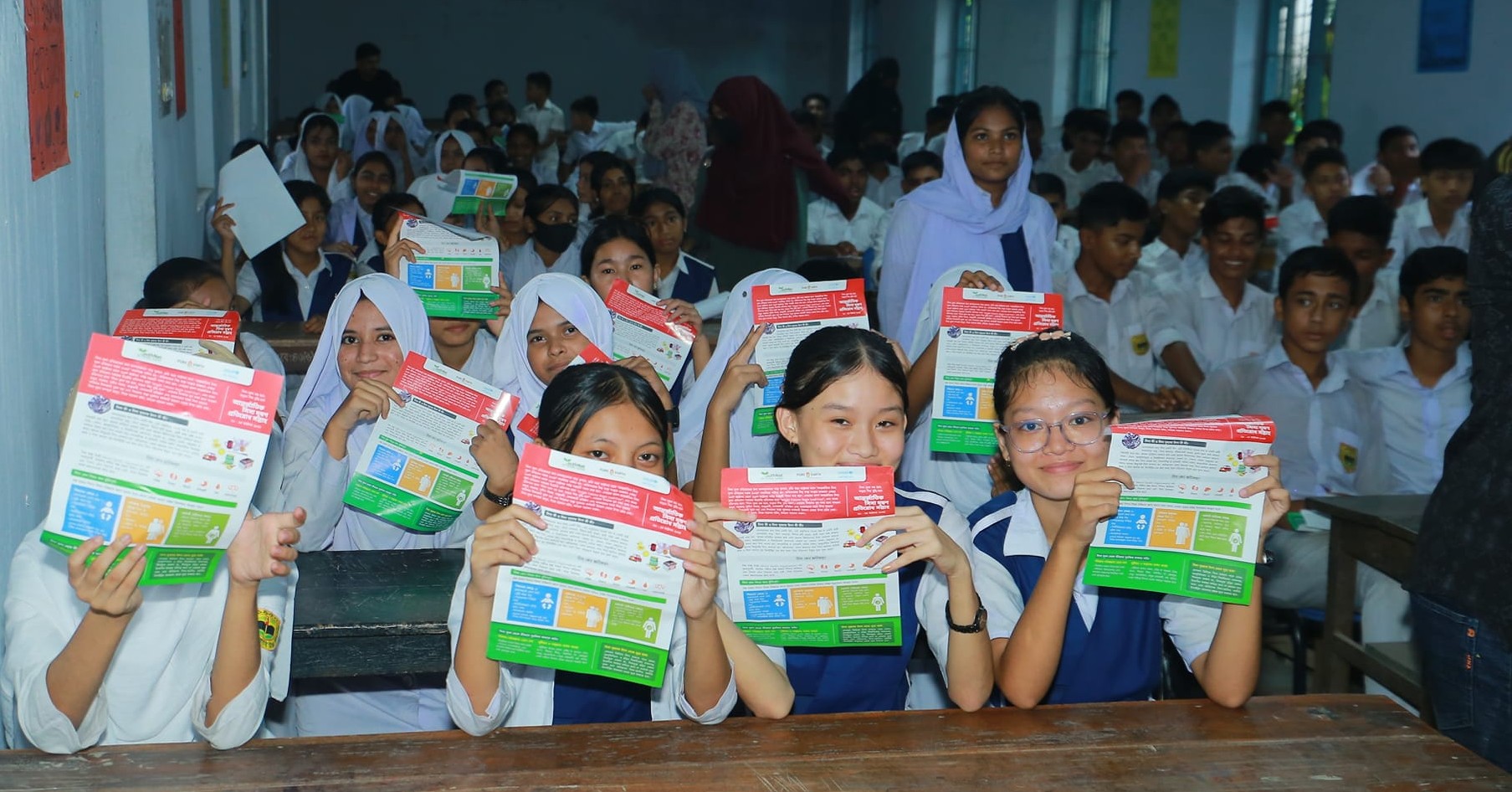
YouthNet’s approach goes beyond protest. Their community education programmes focus on behavioural change to reduce lead exposure from household items like toys, paint, ceramics, cosmetics, and turmeric. Village meetings, training workshops, and school-based sessions help raise awareness of hidden risks and promote safer practices.
At the same time, their digital campaigns, such as #SolveLeadPollution and LeadFreeBangladesh—use youth-led research and data storytelling to reach wider audiences. These efforts have helped reframe lead contamination not just as an environmental issue, but as a crisis of public health, children’s rights, and governance.
 Their sustained pressure contributed directly to the development and adoption of Bangladesh’s first-ever National Action Plan on Lead Pollution, a policy framework that lays out steps for enforcement, health screenings, and regulation of the battery recycling sector.
Praise from Government, Pressure for Action:
As Bangladesh moves toward a greener future, the lead crisis is a sobering reminder that environmental progress must be rooted in justice, not traded for the well-being of its most vulnerable. The fight YouthNet Global is leading is not just about lead; it is about accountability, dignity, and a future where development doesn’t come at the cost of poisoned communities.
Syeda Rizwana Hasan, the minister-ranked adviser to Bangladesh’s Ministry of Environment, Forest and Climate Change in the interim government, acknowledged YouthNet’s contribution. “YouthNet Global has shone a much-needed light on a hidden crisis,” she said. “Their grassroots mobilisation and policy advocacy show the power of youth to drive environmental justice in Bangladesh.”
While authorities have pledged continued enforcement, YouthNet argues that a broader and more sustainable approach is needed. While authorities have pledged to continue enforcement against illegal lead operations, YouthNet is calling for a broader, more sustainable response. The group is demanding widespread public health screenings, medical treatment for affected communities, investment in safe, regulated battery recycling technology, and visa restrictions on foreign nationals involved in environmental crimes.
At the same time, YouthNet continues to push for legal protections for environmental defenders, many of whom face harassment or legal retaliation for speaking out.
Building Vigilance From the Ground Up:
To strengthen grassroots oversight, YouthNet is also working to establish district-level monitoring committees involving both local administration and citizen representatives. These community-based bodies, the organisation argues, are vital for identifying illegal operations, protecting whistle-blowers, and ensuring enforcement of environmental laws in rural and hard-to-reach areas.
 In parallel, the group is planning to develop a digital platform to enable citizens to anonymously report illegal lead-smelting sites. By combining geo-location tools, community verification and real-time alerts to the media and regulators, the platform aims to give people the power to expose polluters and hold authorities to account.
“This crisis cannot be solved by policy alone,” said Sohanur Rahman, Executive Coordinator of YouthNet Global. “It demands local vigilance, public participation and political courage to protect our people and environment.”