Technical negotiators who spent the first week wrestling over contentious language have now handed over to ministers, whose task is to break deadlocks on fossil fuel phase-out, adaptation, loss and damage funding, and the global architecture of climate finance. With temperatures rising globally and trust fraying inside the talks, many observers say the coming days will determine whether COP30 can deliver anything close to the scale of action climate science demands.
Simon Stiell, the UN’s climate chief, warned negotiators that progress so far falls well short of what is needed. “The spirit is there, but the speed is not,” he said. “Real-world climate impacts are accelerating. Negotiations are not.”
Brazil’s vice-president Geraldo Alckmin echoed this urgency, saying the world’s poorest communities “cannot wait for another cycle of promises that never turn into reality”.
The COP30 presidency released a five-page summary late on Sunday attempting to map a way forward on several thorny issues, including strengthening national climate plans and shaping a global transition away from fossil fuels — a proposal backed by a swelling coalition of governments but fiercely resisted by major producers.
Bangladesh warns survival is at stake
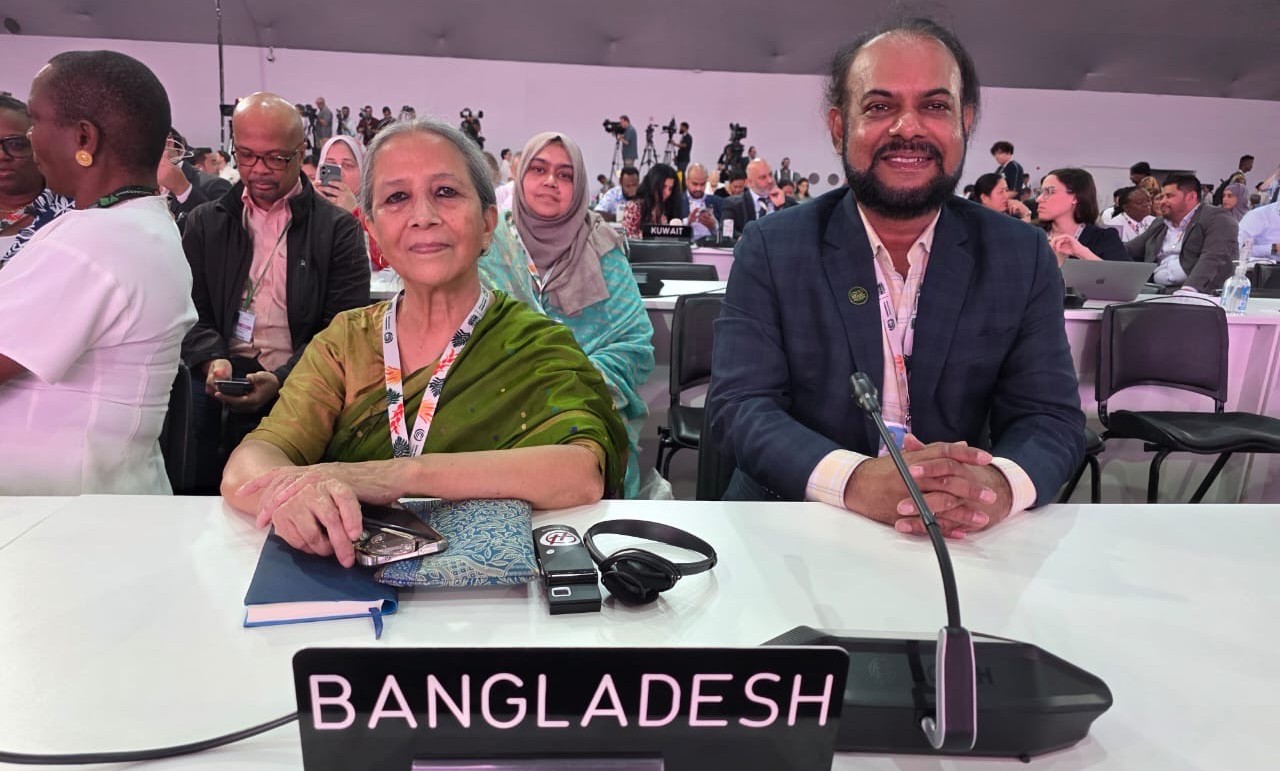
For climate-vulnerable countries, the failure to resolve the finance crisis remains the biggest threat to meaningful progress. Adviser to the Ministry of Fisheries and Livestock Farida Akhter, who is leading the Bangladesh delegation told, “Climate finance is not a matter for negotiation but a question of survival, justice, and human dignity.”
Her comments reflect deep frustration among developing nations who say the gap between rhetoric and delivery has never been wider. Last year’s pledge to mobilise US$300bn annually for developing countries remains distant, and many fear that without secure, grant-based finance, any promise of ambition will be hollow.
Youth leaders demand a just, people-centred transition
Youth climate advocate Sohanur Rahman urged ministers to confront the political reality of a world slipping further out of line with the 1.5C threshold.
“We need a decisive course correction grounded in fair, grant-based climate finance, stronger and fit-for-purpose adaptation support, a full fossil fuel phase-out, and a Gender Action Plan that actually advances gender equality,” he said.
Sohanur also warned that the current discussions on the Just Transition Work Programme risk becoming symbolic unless underpinned by real commitments.
“Just transition must not be reduced to a slogan,” he said. “We need a concrete mechanism that supports workers, informal labourers, women, and climate-impacted communities in the Global South. Without justice at the centre, the transition will deepen inequality rather than solve it.”
Fossil fuel lobbying and fragile progress
Efforts to craft a global roadmap for moving away from fossil fuels have gained political traction, but ministers remain divided on whether COP30 should call for an explicit “phase-out”. More than a thousand fossil fuel lobbyists have registered for COP30, prompting heavy criticism from campaigners who say the industry’s influence continues to undermine ambition.
Updated national climate plans submitted this year also remain far off track. Of the 116 countries that filed new or strengthened commitments, analysts say the collective impact is still nowhere near sufficient to limit warming to 1.5C.
Meanwhile, scientists and members of The Elders circulated flyers across the venue urging negotiators to “ignite a global effort to protect life in all its forms”, calling for a rapid phase-out of fossil fuels and the reversal of Amazon forest loss.
A critical week ahead
As the second week begins, negotiators face the challenge of bridging deep divides on finance, fossil fuels and global equity — all under the shadow of worsening climate impacts and growing disillusionment among developing nations.
What happens over the next few days, observers say, will reveal whether COP30 marks a turning point or yet another missed opportunity in a decade already defined by climate emergencies.