United news 24 desk ::
Experts, policymakers, and youth leaders in Bangladesh have called for urgent investment in wetlands, describing them as essential natural infrastructure for climate resilience, ahead of the COP30 climate summit in Belém, Brazil.
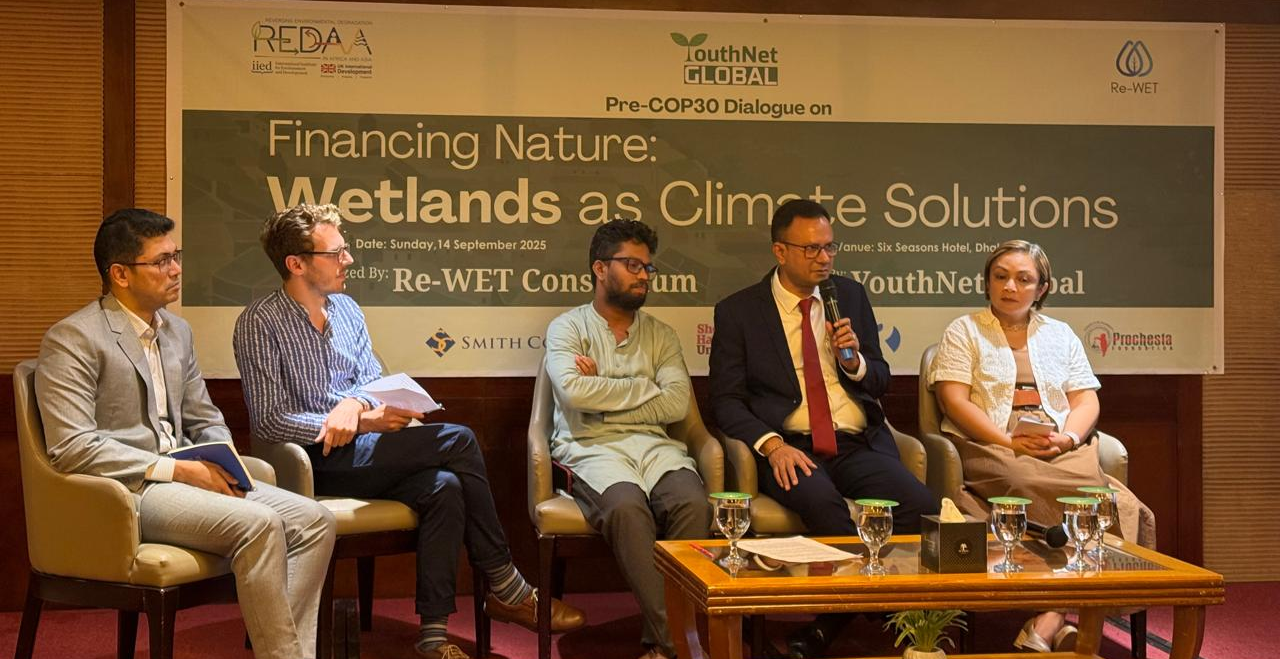
Speaking at the Pre-COP30 dialogue, “Financing Nature: Wetlands as Climate Solutions,” held in Dhaka on Sunday, participants highlighted the critical role wetlands play in protecting communities from floods, storing carbon, and sustaining livelihoods. They warned that financing for nature-based solutions remains limited and often fails to reach the most vulnerable communities.
The event was organised by YouthNet Global under the ReWET Consortium, part of the UK-funded Reversing Environmental Degradation in Africa and Asia (REDAA) programme. Government officials, international partners, academics, and community representatives discussed how wetlands support livelihoods, urban development, and climate adaptation.
“Nature must be at the centre of Bangladesh’s climate strategy,” said AKM Sohel, Additional Secretary and UN Wing Chief at the Ministry of Finance’s International Climate Finance Cell. “We need to explore every option from the Green Climate Fund and Adaptation Fund to concessional loans and green bonds – to mobilise the scale of resources required.”
In a keynote presentation, Dr Suborna Barua, Professor of Finance at the University of Dhaka, urged decision-makers to rethink wetlands. “If we frame wetland restoration in terms of economic value and risk mitigation, both public and private investments will follow. Wetlands are natural infrastructure: they deliver measurable financial returns while protecting communities,” she said.
A panel on “Unlocking Climate Finance for Wetlands” was moderated by Farah Anzum, Bangladesh Country Lead of GSCC, and co-chaired by Chowdhury Liakat Ali, Director of the Sustainable Finance Division at Bangladesh Bank. Independent consultant Dr Haseeb M. Irfanullah said that nature finance should adopt a justice lens, going beyond mitigation and adaptation to include loss and damage.
Dr Mohammad Emran Hasan, Head of Climate Justice and Natural Resource Rights at Oxfam Bangladesh, emphasised that finance must prioritise vulnerable communities and adopt a justice-centred approach. Panelists noted that while $384 billion is required globally for nature-based solutions, Bangladesh still lacks a national biodiversity finance framework. Proposed instruments included green bonds, debt-for-nature swaps, and a framework similar to the Taskforce on Nature-related Financial Disclosures (TNFD).
Dr Haseeb M. Irfanullah, independent consultant, said: “Nature finance should not focus only on mitigation. It must also adopt a justice lens, going beyond adaptation to address loss and damage for the communities most at risk.”
Highlighting the role of the banking sector, Tashmeem Muntazir Chowdhury, Head of ESG & Sustainable Finance at BRAC Bank Limited, said: “Green bonds, supportive policies, and stronger governance are essential to scale up nature finance.” Chowdhury Liakat Ali urged private banks to increase investments in nature-based solutions, noting this is critical for meeting Bangladesh’s climate and development goals.
Sohanur Rahman, Executive Coordinator of YouthNet Global, said: “When we are trusted with resources, we turn ideas into action. We restore wetlands, protect mangroves, practise regenerative farming, and create green jobs.” He added, “Every dollar invested in youth-led nature-based solutions strengthens climate resilience, biodiversity, and communities.” He stressed, “This isn’t just funding projects, it drives innovation, research, leadership, and intergenerational justice.”
Sohanur emphasised: “Youth are ready to lead as custodians of nature-based solutions. Now we need the right support to scale our impact.”
International representatives at the closing plenary praised Bangladesh’s efforts. ASM Marjan Nur from the British High Commission said the country’s locally led adaptation initiatives set an example for other climate-vulnerable nations. Nayoka Martinez-Bäckström from the Embassy of Sweden added: “Investing in wetlands strengthens resilience and contributes to global climate goals.” Other speakers, including Dr Felix Gerdes from FES Bangladesh, Julien Deur from the French Embassy, and Jannis Hussain from the German Embassy, highlighted the need to place nature at the heart of climate finance.
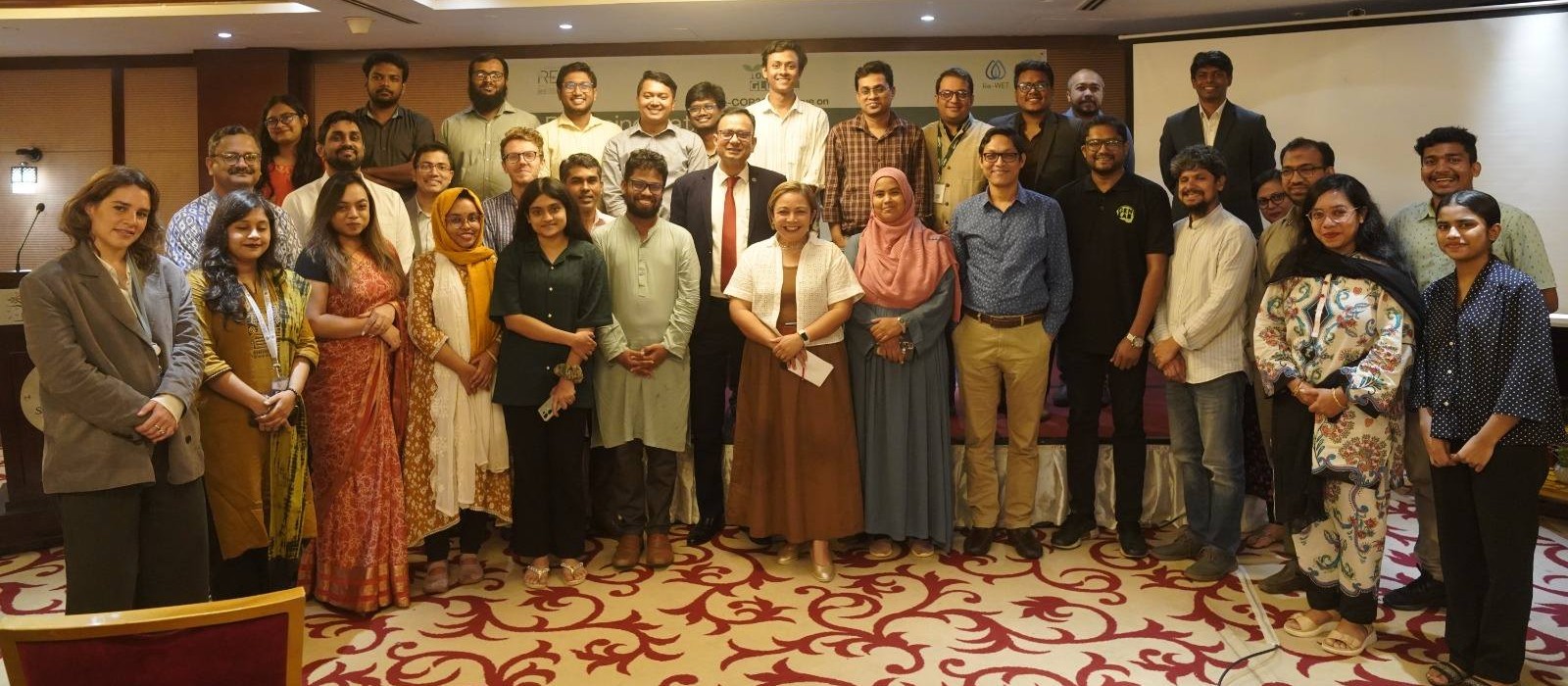
Academics also underscored wetlands’ broader role in social and urban infrastructure. “Wetlands connect people, nature, and justice,” said Dr Tanzil Shafique, architect and researcher at the University of Sheffield. Sifullah Khaled, Assistant Professor at Sheffield Hallam University, added: “Mobilising wetlands finance is urgent. It must become part of Bangladesh’s overall climate strategy.”
The dialogue concluded on a cautiously optimistic note. With the launch of a COP30 Policy Brief on Nature Finance, the proposal for a Dhaka Wetland Restoration Trust Fund, and renewed commitments to connect communities, youth, government, and financial institutions, the foundations are being laid for decisive, sustainable action to protect the city’s wetlands and the communities that depend on them.